In short: After the first funding round, the founder has to become a CEO: move from doing to leading, hire a management team and let it work, get used to being an employee of the company they founded, work with a board that represents investors, and hit the goals they promised before the next round. Most of the difficulties at this stage don’t come from a lack of knowledge, but from habits that were right before the round – and suddenly get in the way. A mentor who has already made this transition helps you see them in time.
The day the money lands in the account, there’s a sense of relief. After months of meetings, decks and “no” after “no” – you made it. But it’s also the day your job changes.
Until the round, the founder does everything: sells, plans, hires, and sometimes fixes the product themselves. After the round, there’s money, there are expectations, and there’s a timeline. What got you here isn’t exactly what will take you further.
I went through this transition at Highcon, which I led as CEO for about a decade – through funding rounds, building a management team and working with a board. Today I see it again and again with the CEOs I mentor.
What changes after the first round
1. From doing to leading
Before the round, your value was in what you did yourself. After the round, it’s in what others do because of you. This is the hardest shift, because it requires giving up the things you’re best at.
2. From a small team to an organization
In a team of five, everyone knows everything. In a team of twenty, you need structure, processes, and people who manage people. And for the first time, you need to hire managers – and let them manage.
3. From owner to employee of your own company
Until the round, the company was yours. After the round, you’re still a founder and a shareholder, but you’re also an employee of the company. Your salary is set with the board’s approval, big decisions need its approval, and in an extreme case the board can even replace the CEO. Not every founder is ready for this change – and it’s worth understanding it before you sign, not after.
4. A board and investors
Suddenly you have a board. It doesn’t work for you, but it isn’t against you either. You need to learn to report, to ask for help, and to bring bad news in time – not after it can no longer be hidden. How to do that, below.
5. The money buys time, not peace of mind
The money you raised has to last until you manage to raise again. To raise again, you’ll need to show the next investors that you reached the goals you promised – customers, revenue, product progress. So every expense is really a decision about how much time you have left to get there. You can do the math with the runway calculator, and I wrote more about it in First-Time Founders: How to Build a Financial Plan.
6. Culture you have to build on purpose
What happened on its own in a small team – trust, transparency, an open door – won’t happen on its own as the company grows. You need to decide what matters to you, and build it deliberately.
7. Loneliness
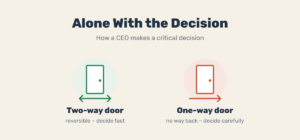
The CEO is the one who makes the final decision and carries the responsibility for it. The team expects direction and stability, the board expects results, and a co-founder sometimes has a different perspective or interest. Even with many people around, there are decisions the CEO makes alone – and there isn’t always someone to think them through out loud with, without the conversation itself affecting the situation.
Common mistakes in the year after the round
- Hiring too fast. Money in the account tempts you to expand. But every hire shortens the time until the next round – and product-market fit isn’t always proven yet.
- Continuing to do everything yourself. A CEO who stays the head of sales, the product manager and the recruiter becomes a bottleneck.
- Hiring only people you know. It’s easy to bring people from your previous job. But a whole team from the same place brings that place’s culture with it, too.
- Hiding things from the board. A board that finds out about a problem late loses trust. A board that heard about it in time can help.
- Drifting away from customers. As the company grows, the CEO is busy with hiring, the board and processes. But customers are still where you learn the most.
How to work with a board that represents investors
In most startups, some of the board members represent the investors. That’s natural: they invested, and they want influence. But once someone sits on the board, they’re supposed to wear the board member’s hat – and look after the company’s interest, not only the interest of the fund they represent. Most of the time the interests are the same. In hard moments, like a down round, a sale of the company or a change of direction, they can split.
Six things that help the board work for the company:
- Know the rules before the first meeting. The investment agreement and the company’s articles define which decisions require approval from the board or the investors – for example another round, the annual budget or a sale of the company. Go over them with the company’s lawyer, and talk openly with the board members about expectations. When the rules and expectations are clear in a calm moment, it’s much easier to return to them in a hard one.
- Put conflicts of interest on the table. When an issue touches the interest of a specific investor – for example the terms of a round they’re participating in – say so openly. In such cases it’s common for the board member who represents them not to take part in the decision. It isn’t personal, and it keeps everyone’s trust.
- Hold every decision up against the company’s interest. When a discussion drifts toward one investor’s direction, you can simply ask: “What’s best for the company here, two years from now too?” The question doesn’t blame anyone, and it brings everyone back to the same side of the table.
- Add an independent director. A board member who represents neither an investor nor the founders balances the discussion, brings outside experience, and can sometimes say what others can’t. It’s worth choosing someone who has already sat on boards and been through crises.
- Diversify the board. When the board includes both a representative of a strategic investor – a company from the industry – and a representative of a financial investor, like a venture capital fund, each brings a different angle. The strategic investor knows the market, the customers and the technology. The financial investor thinks about budget discipline, the next round and the company’s valuation. The combination balances the discussion, and makes it less likely that one interest takes over. (I wrote about the types of investors and what each one looks for in The Art of Approaching Investors.) Just remember that a strategic investor may also be a customer, a supplier or a competitor – one more place to watch for conflicts of interest.
- Build relationships between meetings. A short call with each board member before an important meeting saves surprises, shows you what’s worrying each of them, and lets you arrive at the meeting with agreements – not confrontations.
How to prepare for the first board meeting
- Send materials in advance, so the meeting is spent on discussion, not on presenting.
- Start with what isn’t working. A board appreciates a CEO who sees the problems before someone else points them out.
- Come with a question. The board isn’t only who you report to – it’s also a source of experience and connections. Ask for help on one specific topic.
- Don’t surprise them. If there’s bad news, update the lead investor before the meeting.
Questions worth asking yourself
- Which things am I still doing myself that someone else should already be doing?
- Who on my management team can decide without me – and about what?
- What doesn’t my board know that it would want to know?
- How long has it been since I spoke with a customer myself?
How a mentor helps at this stage
After the round, a CEO has many people around – the team, the board, investors – but very few people to think out loud with. A mentor who has already made the transition from founder to CEO helps with several things:
- Reflection: showing you the pre-round habits that now get in the way, and your blind spots.
- Decisions: thinking through hard decisions together – hiring management, layoffs, a change of direction – before you bring them to the board.
- The board: preparing for meetings, and building the right working relationship with board members who represent investors.
- The mental side: the pressure, the loneliness and the fear of disappointing – which there isn’t always room to talk about anywhere else.
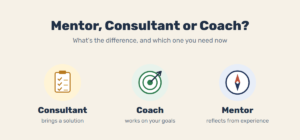
I wrote about the difference between a mentor, a consultant and a coach in Mentor, Consultant or Coach. And if you’re a CEO after a funding round, that’s exactly what I do in Mentoring for Founders and Management Teams.
Frequently asked questions
What’s the difference between a founder and a CEO?
A founder builds the idea and the first team, and usually does a lot themselves. A CEO leads an organization: hires management, sets priorities, works with the board and investors, and is responsible for the company reaching its goals. After the round, the same person has to move from one role to the other.
When should a startup CEO get a mentor?
Often, the year after the first round is the right time: the company is growing, a management team is forming, and there’s a board. That’s exactly when the hardest decisions come up – and at the same time, there are fewer people you can consult with.
Does the founder have to be the CEO?
No. Some founders discover they’re better in another role – product, technology, sales. That isn’t failure, it’s a decision. But it’s worth making it deliberately, and not waiting for the board to make it for you.
What’s the most common mistake after a funding round?
Continuing to work as before the round: doing everything yourself, and not building a management team that can decide without the CEO.
The bottom line: The first round isn’t the finish line, but the starting point of a new job. A good CEO after a funding round isn’t measured by how much they do themselves, but by how well the company works without them.
Raised recently and want someone by your side at this stage? An intro call is a good place to start.