In short: A critical decision is one that’s hard or impossible to reverse, affects many people, and is made without all the information. What makes it hard isn’t only the complexity, but the loneliness and the pressure: the CEO can’t always think it through out loud with the team, the board or a co-founder. To decide better, distinguish between reversible decisions and ones with no way back, define in advance what’s enough to decide, and get help from someone outside who has no stake in the outcome.
Some decisions no one can make for you. Laying off half the employees so the company survives. Changing direction after two years of work. Parting ways with a senior manager who has been with you from the start. Accepting an acquisition offer, or turning it down.
In moments like these, the CEO is surrounded by people – and sometimes still alone. As CEO of Highcon for about a decade, I faced quite a few decisions like these. I was lucky: I had a partner, we shared the difficulties, and we made the hard decisions together. Not every CEO has that.
Today, as I mentor CEOs and senior executives, I see again and again that the biggest difficulty isn’t the analysis, but what happens around it – and whether there’s anyone to think with.
From my book: the decision to stop in Asia
From the chapter “How a Sea Slug, a Chicken Foot and Plastic Plates Taught Me About Business” in my book, “Light and Shadow – A Mental Journey of Entrepreneurship” (translated from Hebrew):
A few years after our successes in Europe and the United States, we decided to expand our activity, and Asia looked like a dream destination. The potential there was enormous, especially in China, where innovation was an immediate need. Besides China, we also opened markets in Taiwan, Japan, India and Thailand, and recruited strong distributors. (…)
Prices in China were far lower than what we knew, profitability was close to zero, and customers demanded immediate service and complete reliability. The combination of low-margin sales and high service costs turned every machine we sold into an almost certain loss. Instead of making money, we felt we were financing our customers.
After a long and exhausting period, we decided to stop the expansion in East Asia and focus on the markets where we were truly profitable – Europe and the United States.
Looking back, what made this decision hard wasn’t the analysis. The numbers were clear. The hard part was everything we had already invested, and the dream Asia represented.
What makes a decision critical
Not every hard decision is critical. Usually, a critical decision is one that:
- Is hard or impossible to reverse. Layoffs, selling the company, exiting a market.
- Affects many people. Employees, customers, investors – and sometimes their families too.
- Is made without all the information. If there were enough information, it would be simple.
- Has to be made in time. Waiting is also a decision, and sometimes the most expensive one.
Why it’s so hard
Loneliness. The team expects direction and stability from the CEO. Sharing doubts with them too early can create unnecessary uncertainty. The board has its own interests and perspective, and a co-founder sometimes holds a different position. So the CEO is left to think alone.
Pressure. Under pressure, people tend to choose whatever relieves the pressure fastest – not necessarily what’s right.
History. The more you’ve invested in a direction, the harder it is to let go of it – even when every sign says you should. That’s exactly how it was with Asia.
Fear. Of disappointing, of being wrong, of looking weak. This fear isn’t always conscious, but it affects the decision.
Five common traps
- Postponing. Waiting for one more data point, one more meeting, one more quarter. Sometimes that’s right, but usually it’s a way of not deciding.
- Deciding too fast. To get rid of the discomfort, not because you’ve really reached an answer.
- Seeking everyone’s agreement. A critical decision will almost never please everyone. Whoever waits for consensus waits a long time.
- Consulting only those who agree. It’s easy to hear what you want to hear. It’s harder – and more useful – to hear from someone who thinks differently.
- Deciding completely alone. Without testing your assumptions against anyone. The decision stays yours, but the thinking doesn’t have to.
A simple process for a critical decision
- Define the decision in one sentence. “Should we cut the team by 30% by the end of the quarter?” – not “what do we do about the situation.”
- Check whether it’s reversible. Jeff Bezos once described a simple distinction: some decisions are a “two-way door” you can walk back through, and some are a “one-way door.” The first kind can be made fast. The second is worth making slowly and carefully.
- Decide what’s enough to decide. What information is missing, and how long you can wait for it. After that date – you decide with what you have.
- Write down the options – including “do nothing.” For each one: what’s the risk, what’s the upside, and what happens if you’re wrong.
- Ask what you’d recommend to another CEO. That distance helps separate the considerations from the fear.
- Test your assumptions with someone outside. Someone with no stake in the outcome, who will also tell you what’s unpleasant to hear.
- After the decision – communicate it well. Many right decisions fail because of how they were delivered to the team.
Questions worth asking yourself
- What do I know, and what am I only assuming?
- What am I afraid of in this decision – and how is the fear affecting me?
- If I came into the company today, without the history, what would I decide?
- What’s the cost of not deciding for another month?
- How will I explain this decision to the employees a year from now?
How personal mentoring helps in these moments
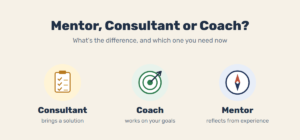
A mentor doesn’t make the decision for you. But a mentor gives you a place to think out loud – without the conversation itself affecting the team, the board or your co-founder. A mentor who has faced similar decisions helps:
- Break the decision down: separate facts from assumptions, and what’s really at stake from what only looks urgent.
- Reflect: show you your blind spots, and the patterns that repeat in your hard decisions.
- See the mental side: the fear, the pressure and the fatigue – which affect the decision more than people tend to admit.
- Prepare for the day after: how to present the decision to the board, and how to deliver it to the team.
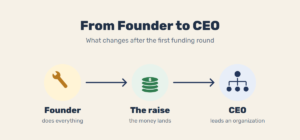
I wrote about the questions a mentor asks and how they reveal patterns in The Questions a Mentor Asks. I wrote about the CEO’s loneliness after a funding round in From Founder to CEO. And if you’re facing a decision like this right now, that’s exactly what I do in Mentoring for Founders and Management Teams, and on the mental side – in Light & Shadow Mental Mentoring.
Frequently asked questions
What is a critical decision in management?
A decision that’s hard or impossible to reverse, affects many people, and is made without all the information – for example layoffs, a change of direction or selling the company.
Who can a CEO consult about a hard decision?
The board, other CEOs who have been through similar situations, and a mentor. The difference is that a mentor has no stake in the outcome, so you can think out loud with them without the conversation affecting the company.
How do you know when to stop gathering information and decide?
Define in advance what information is really missing, and until what date you can wait for it. When the date comes, decide with what you have. And for decisions you can reverse – you can decide faster.
What do you do if the decision turns out to be a mistake?
Admit it early, learn what was missing, and correct course. A CEO who admits a mistake in time keeps the trust of the team and the board better than one who tries to defend it.
The bottom line: A critical decision will stay yours – that’s part of the job. But there’s no reason to think it through completely alone. Define it, check whether it’s reversible, set what’s enough to decide, and test your assumptions with someone who has no stake in the outcome.
Facing a decision like this right now? An intro call is a good place to start.