In short: Early-stage founders hear a lot of advice, and most of it contradicts itself. That doesn’t mean anyone is wrong: each piece of advice is right for the person who gave it, from their experience and from where they stand. To avoid getting lost, ask who said it and why, separate facts from opinions, go back to your why, and listen to yourself too. In the end, listen to many opinions, and decide for yourself what is right for you.
When every meeting confuses you all over again
“Check your patents before anything else.”
“Forget the patents, the lawyers will sort it out later.”
“Join an accelerator.”
“Don’t waste your time, they have no money to give.”
“Go for the safe bet.”
“Go for the most innovative idea.”
I recently read a post by a founder who has spent months trying to move a few ideas forward. He met people, consulted, asked. His list had almost 20 pieces of advice he had received, and almost every one contradicted the one before. After every meeting he went home more confused.
I know that feeling. Most founders do.
Why does everyone tell you something different?
Because most of the advice is right. Each piece is right for the person who said it.
An investor looks at your idea through the question of whether it will return their money. A lawyer sees risks. Someone who built a software company sees a software company’s path. A good friend mostly sees you, and worries. Everyone speaks from their own experience, their own company and the place where they stand.
The problem starts when you try to follow all of it. Then you go nowhere, because every step in one direction is a step away from another piece of advice.
Four things that help you sort it out
- Ask who said it and why. A friend, an investor, a lawyer and a grants consultant see the same idea from different angles. Advice is data, not a verdict.
- Separate facts from opinions. “The product needs regulatory approval” is a fact. “A $30 million market is too small” is an opinion.
- Go back to your why. Why did you start, and what do you want to build? When that is clear, every piece of advice is measured against it, not against the previous piece of advice.
- Listen to yourself too. After every meeting, ask: which advice gave me energy, and which felt foreign? That is data too.
What they told us at Highcon
At Highcon, people told us a lot of things too.
They said lasers could not reach the cutting speeds we needed. We reached them.
They said our technology could not produce high-quality packaging. Cosmetics companies and premium products used our technology, and the products were on the shelves.
In my book “Light and Shadow” (Hebrew), I wrote about the advisors we met along the way: some were precise, and some were confusing or even harmful. And we learned something simple:
“We learned that giving advice is easy; taking responsibility for its results is much harder.”
Not every “impossible” is a fact. Sometimes it is just the opinion of someone who never tried.
Listen to many opinions, and decide for yourself
This is the most important message: listen to many opinions, and decide for yourself what is right for you. With your heart.
None of your advisors will wake up in the morning with your company. You will. Even if you are wrong, a mistake you chose can be corrected and learned from. Someone else’s mistake just leaves you confused.
Deciding for yourself doesn’t mean being alone. In the book I wrote that real wisdom is building a circle of people who see what you can’t. Not many people, but a few right ones, who know you and your dream.
And what about the loneliness?
The founder who wrote that post ended with a sentence that touched me: it is very lonely to spend whole days by yourself.
That loneliness is part of the founder’s journey, and there is no point pretending it isn’t there. That is exactly why it is worth finding one steady person, a mentor or a partner for the road, who won’t decide for you, but will help you hear yourself. I wrote separately about the difference between a mentor, a consultant and a coach and about how to choose a business mentor.
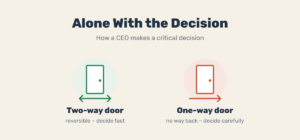
And if you are already facing a big decision, I also wrote about how to make a critical decision when you are alone with it.
Frequently asked questions
What do you do when two experienced people give you opposite advice?
Ask what experience each of them is speaking from and what they see from where they stand. Often both pieces of advice are right, each in a different context. Deciding which one fits you is your call, based on what you want to build.
How do I tell a fact from an opinion in the advice I got?
A fact can be checked: regulation, market data, the price of a component. An opinion is someone’s assessment, for example that a market is too small or that investors won’t like the idea. Check the facts and weigh the opinions.
Should I keep going when experts say it is impossible?
Not every “impossible” is a fact. At Highcon we were told that certain laser cutting speeds were impossible, and we reached them. Ask which assumptions the “impossible” rests on, and test them.
When should I go to a mentor rather than to another advice meeting?
When the meetings confuse you more than they help. A steady mentor knows you and your path, and their role is to help you decide, not to decide for you.
Does every meeting leave you more confused? An intro call is a good place to start.